Storm Debris Cleanup After a Hurricane: A Northeast Florida Guide
After a hurricane or tropical storm moves through Northeast Florida, the cleanup can feel overwhelming. Downed limbs, soaked carpet, damaged fencing and torn shingles pile up fast, and everyone on the street is dealing with the same thing at once. A clear plan helps you work safely, protect your insurance claim and get your property back in shape sooner.
This guide covers the steps that matter most after a storm, from staying safe to sorting debris to deciding whether a dumpster makes sense for your cleanup.
Safety Comes First
Before you start moving debris, take a careful look around your property.
- Stay away from downed power lines. Treat every line as live and report it to your utility.
- Watch for hidden hazards. Floodwater and wet debris can hide nails, broken glass, sharp metal and wildlife.
- Use the right gear. Work gloves, sturdy boots, long pants and eye protection go a long way.
- Be careful with chainsaws. Limbs under tension can spring back. If a tree is large or tangled near your home or a power line, call a professional.
- Run generators outdoors only. Keep them well away from windows and doors.
- Pace yourself in the heat. Post-storm days in Florida are often hot and humid. Drink water and take breaks.
Document Damage for Insurance
Before you clean anything up, take photos and video of the damage. Capture wide shots of each area and close-ups of specific problems, such as a hole in the roof, a fallen tree on a fence or water lines on drywall. Photograph damaged items before you throw them out.
Keep notes on what you remove and when. Your insurance company may have specific requirements, so check with your agent about what they need before major debris leaves the property.
Sort Debris Into Separate Piles
If you plan to use county curbside storm debris pickup, sorting is important. Widely used FEMA and county guidance asks residents to separate debris into categories:
- Vegetative debris: tree limbs, branches, leaves, logs and plants
- Construction and demolition debris: drywall, lumber, carpet, furniture, fencing, roofing and other building materials
- Appliances and white goods: refrigerators, washers, dryers, water heaters and AC units
- Electronics: televisions, computers and similar devices
- Household hazardous waste: paints, cleaners, oils, pool chemicals, batteries and pesticides
Mixed piles may be skipped or delayed, so sorting from the start saves time.
Where to Place Curbside Piles
- Keep piles out of the road so traffic and emergency vehicles can pass.
- Keep debris away from storm drains, which need to stay clear to handle runoff.
- Do not stack debris against fire hydrants, mailboxes, utility boxes or power poles.
- Avoid piling debris under low power lines or tree limbs.
Check Your County's Announcements
Each county sets its own storm debris collection plan after an event. Duval, St. Johns, Clay, Putnam and Nassau counties and the cities within them announce pickup schedules, rules and deadlines on their own websites and social media. Check those announcements for the latest information instead of relying on what happened after a past storm.
When a Dumpster Makes More Sense Than Curbside Pickup
County curbside collection is a valuable service, but after a major storm it can take time to reach every street. A dumpster can be much faster for larger cleanups and gives you more control over your timeline. It is worth considering when:
- You have a large volume of debris. A fallen tree, a collapsed carport or a flooded first floor can produce far more than a single curbside pile.
- You need to start repairs quickly. Contractors cannot rebuild until damaged materials are out, and debris sitting at the curb can slow work down.
- Your HOA has rules about curbside piles. Some communities limit how long debris can sit out.
- You want to avoid wet debris sitting in the heat. Soaked carpet and drywall can start to smell and grow mold quickly in Florida weather.
- You are clearing more than one property. Landlords and owners with several buildings to clean up often benefit from a container at each site.
Choosing the Right Dumpster for Storm Cleanup
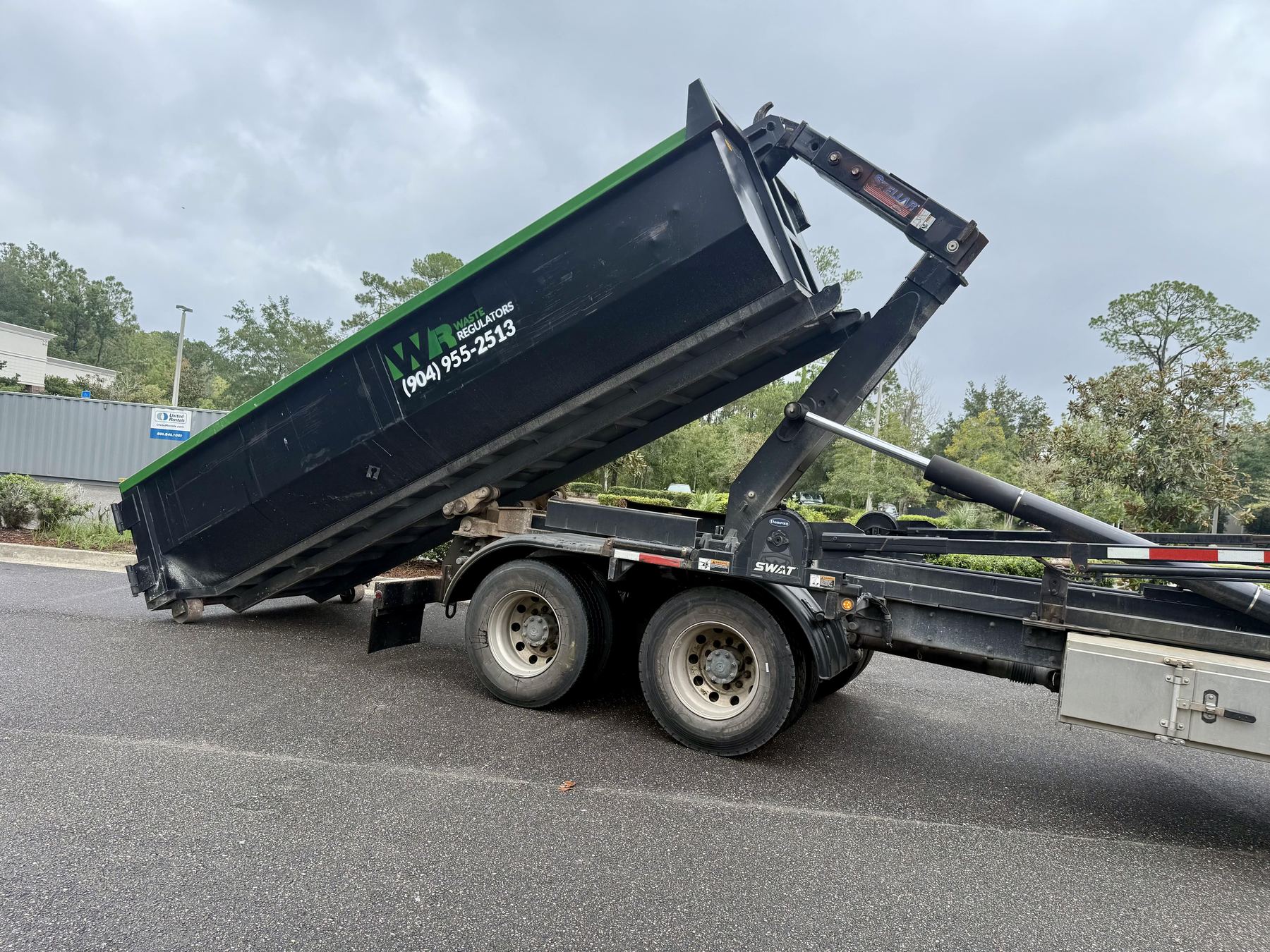
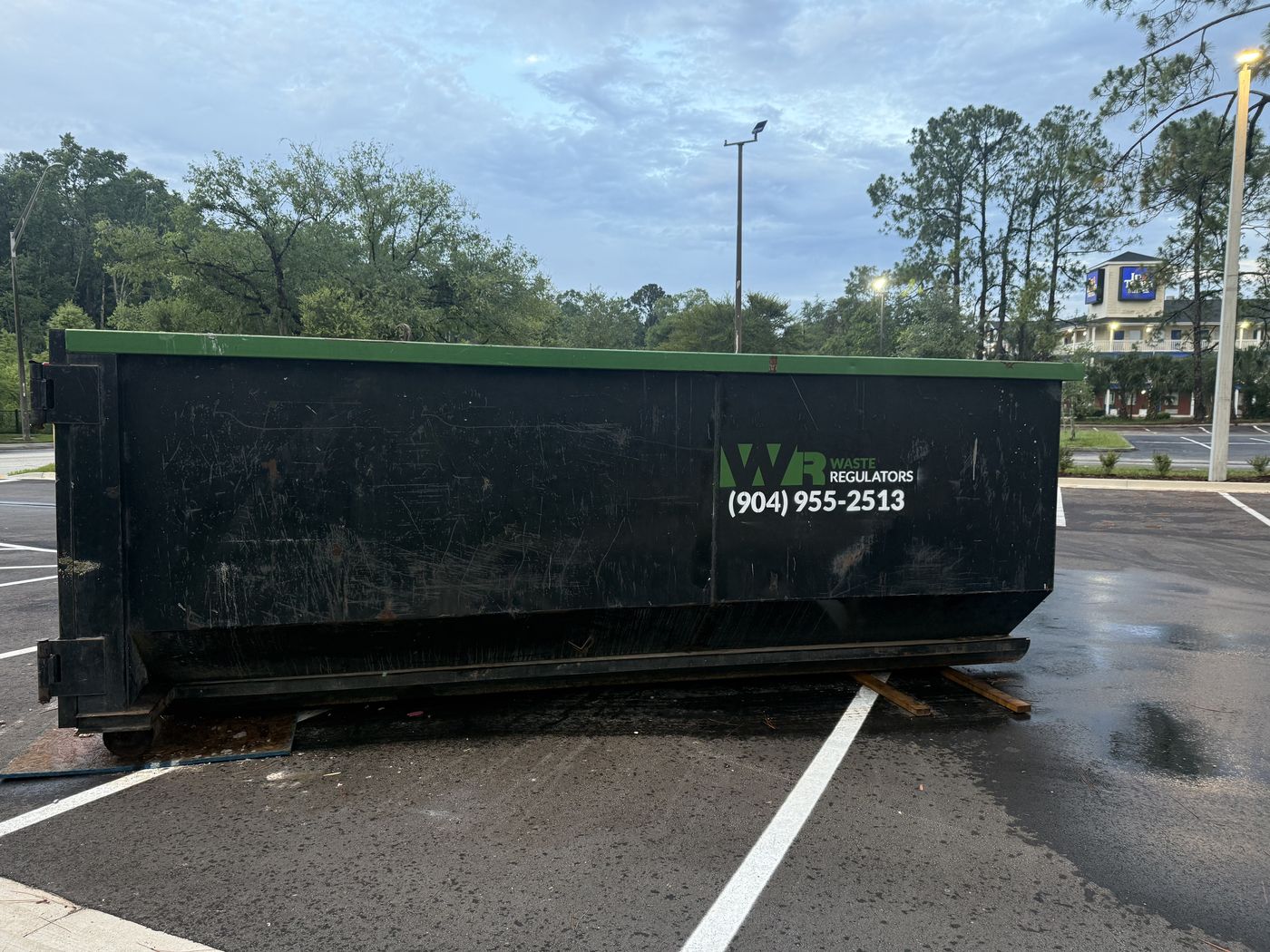
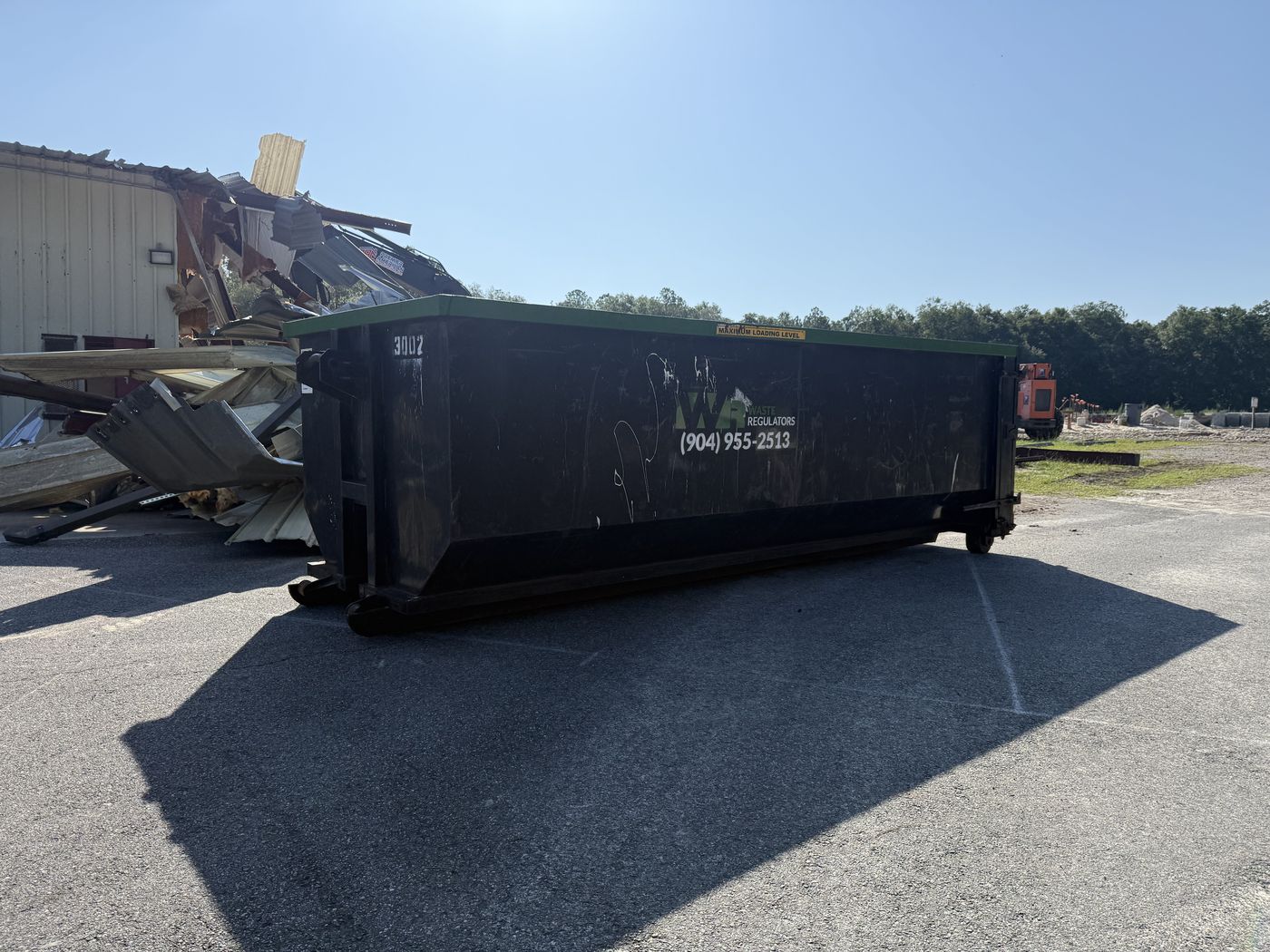
We accept both tree debris and construction debris, which covers most of what a storm leaves behind. Common sizes for storm work include:
- 10 or 15-yard: Yard cleanup, a few fallen limbs, or damaged fencing and small outbuildings.
- 20-yard: Roof damage, flooring and drywall removal after water intrusion, or a larger yard cleanup.
- 30-yard: Major interior tear-outs, large trees, or multiple types of damage on one property.
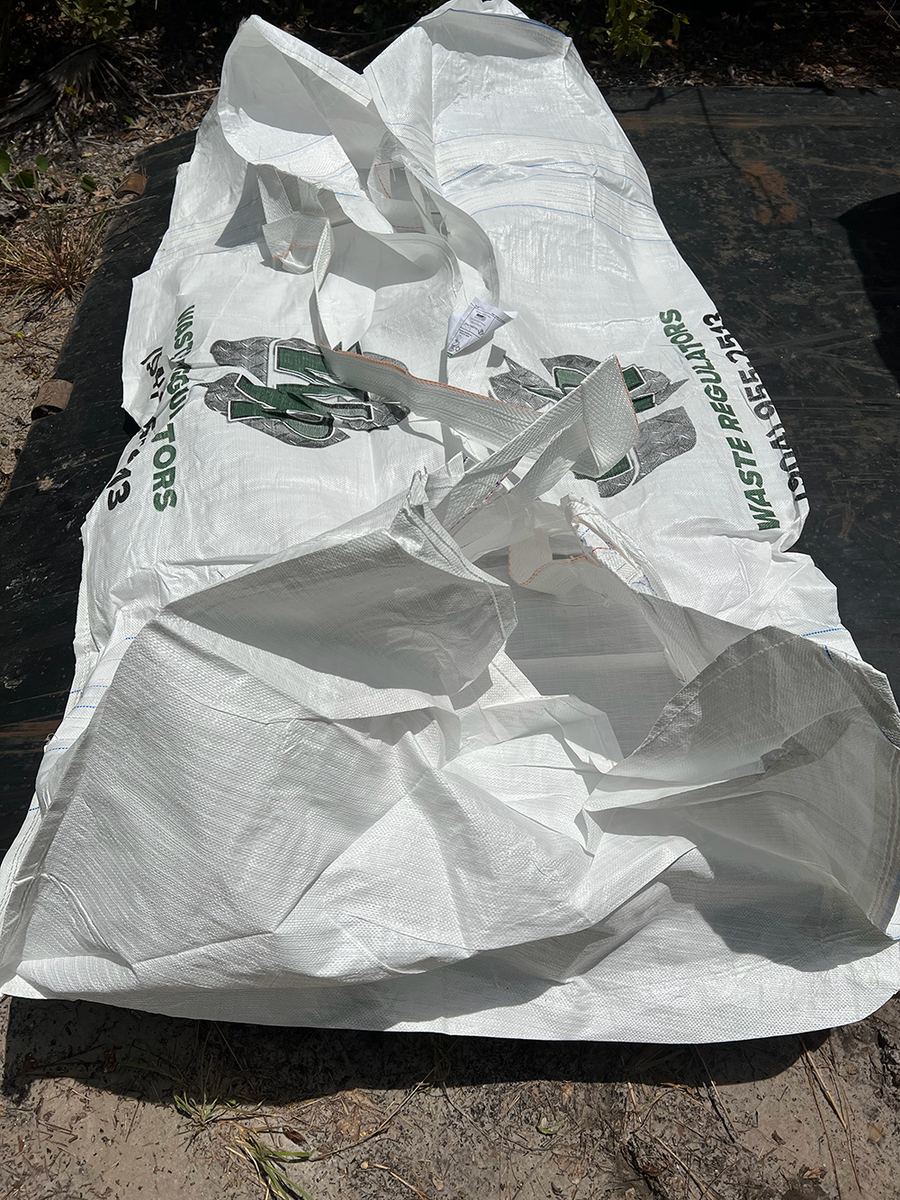
Compare dimensions on our size comparison or read about our residential dumpster service. For lighter loads in a tight space, a dumpster bag can handle smaller cleanups.
What Still Cannot Go In
Even after a storm, the same restrictions apply. Keep these out of the dumpster:
- Gas cans, generator fuel and propane tanks
- Pool chemicals, paints, cleaners and other liquids
- Batteries and tires
- Refrigerators, freezers and AC units with refrigerants, unless approved in advance
- Any material that may contain asbestos
Book Early After a Storm
Demand for dumpsters climbs right after a hurricane. If you know you will need one, call as soon as it is safe to do so. Roads need to be passable for delivery, and we serve customers in the order they schedule, so getting on the list early helps.
Before delivery, clear a spot on your driveway. After heavy rain, soft sandy ground and saturated lawns are poor places for a heavy container.
Plan Ahead for Next Season
Hurricane season comes every year. Keep a basic debris plan in place: know where a dumpster could sit on your property, keep your insurance information handy and save a contact for a local dumpster company.
A Local Team for Storm Cleanup
Waste Regulators is locally owned and operated by Garrett and Melanie Dieas, and we live through the same storms our customers do. When you are ready to clean up, we can deliver the right container to your property. Request a quote or call (904) 955-2513.