What Size Dumpster Do I Need for a Roof Replacement?
A roof replacement creates more debris than most homeowners expect, and almost all of it shows up in the first day or two of tear-off. Old shingles, underlayment, nails, flashing, drip edge and the occasional sheet of rotted decking all have to go somewhere. Having the right dumpster in the driveway before the crew climbs the ladder keeps the job moving and keeps your yard from turning into a debris field.
This guide walks through how to size a dumpster for a roofing project in Northeast Florida, what affects that choice, and how to set things up so the tear-off goes smoothly.
The Short Answer: Most Roofs Need a 20-Yard Dumpster
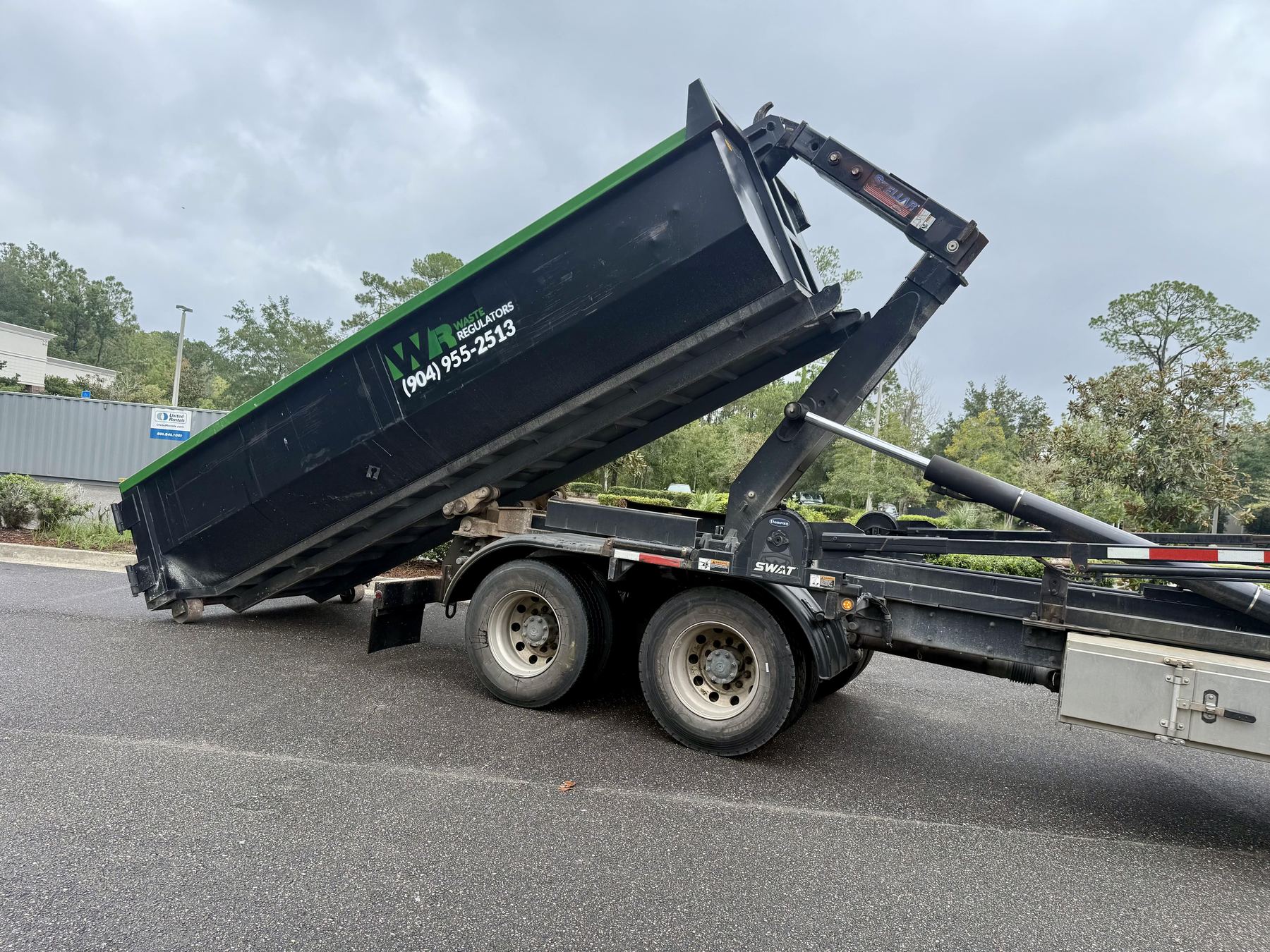
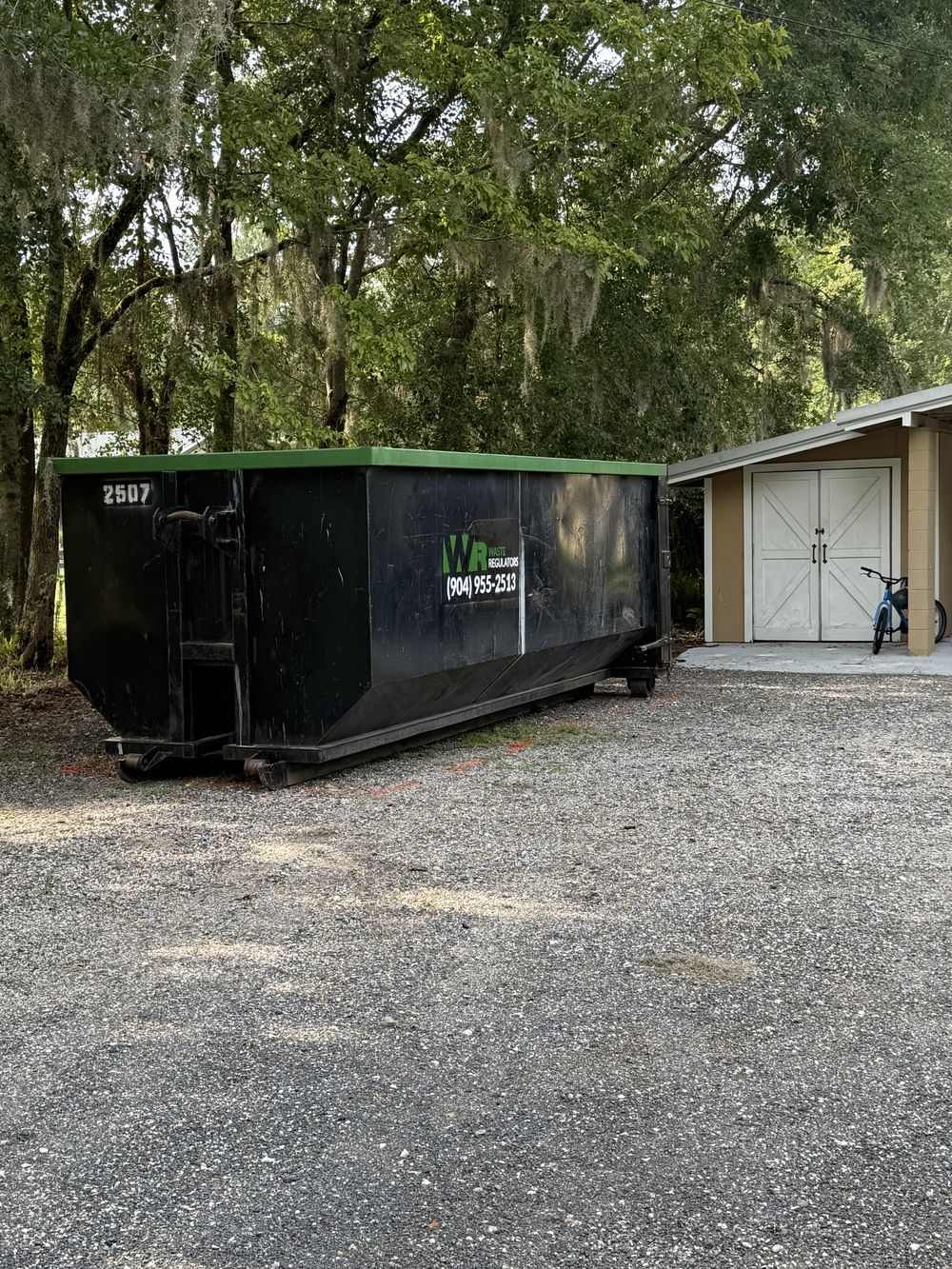
For a typical single-family home with one layer of asphalt shingles, a 20-yard dumpster is the size we recommend most often. It is the workhorse for roofing jobs because it holds a full tear-off on an average house without taking up the whole driveway.
Here is how the sizes line up for roofing work:
- 15-yard: A good fit for smaller roofing jobs, such as a detached garage, a porch or lanai roof, a shed, or a partial repair on one section of the house.
- 20-yard: The standard choice for a full shingle replacement on most homes.
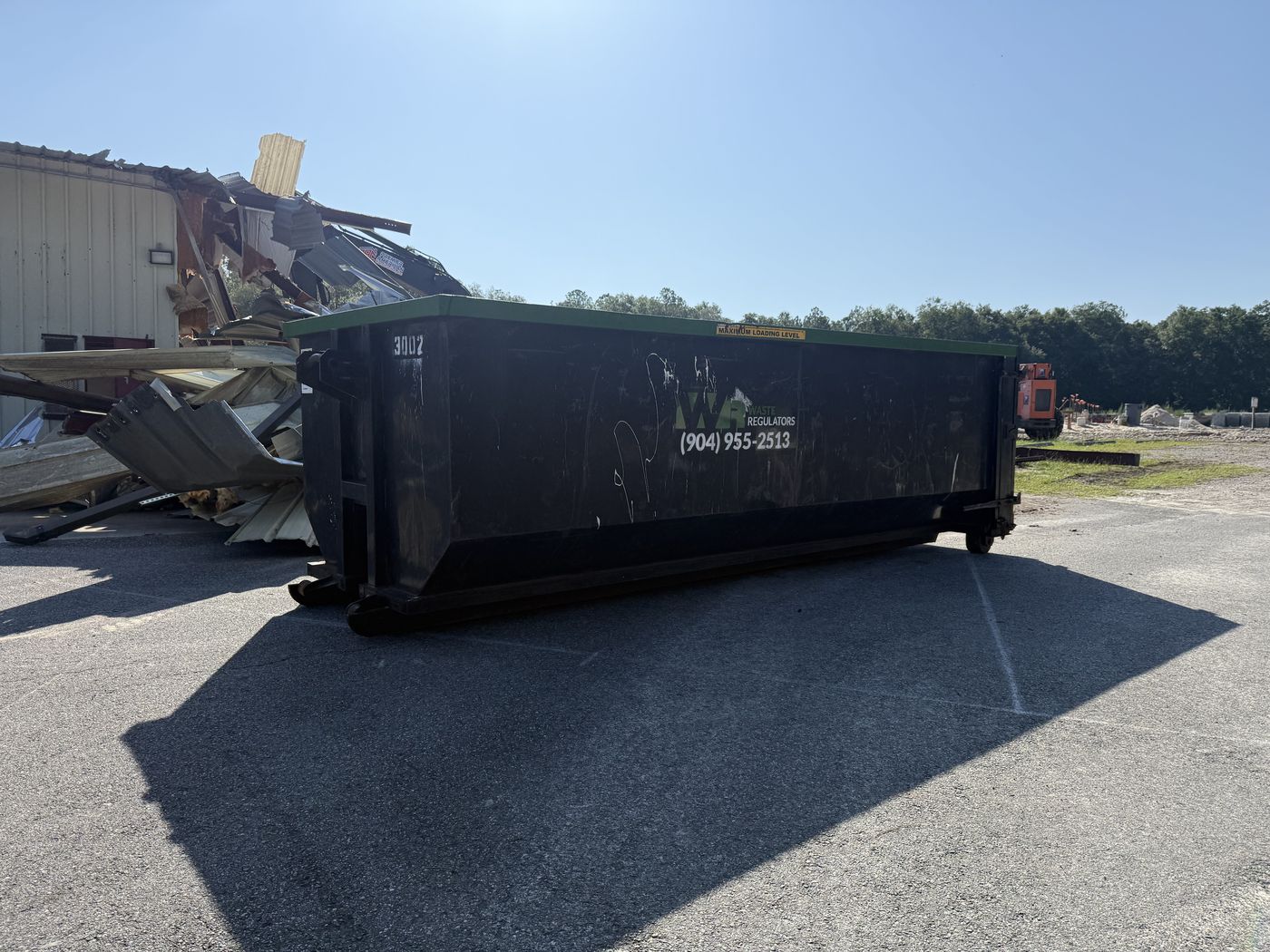
- 30-yard: Better for bigger roofs, steep or complex rooflines with lots of valleys and hips, or tear-offs with more than one layer of shingles. Also worth considering when the roof is only part of a larger project, like an addition or major remodel where framing and drywall debris will go in the same container.
You can compare the dimensions side by side on our dumpster size comparison.
Why Roofing Debris Is Unique
Most cleanouts fill a dumpster by volume. Roofing jobs often fill it by weight. Asphalt shingles are dense, and a pile of them that looks modest can weigh a lot more than the same pile of furniture or cardboard. That is the main reason roofers do not automatically order the biggest container on the lot.
Every dumpster comes with a weight allowance, and that allowance is confirmed with your quote. When you call, tell us what kind of roof you are removing and roughly how big the house is. We will match you to a size that holds the volume without pushing you past the weight that comes with it.
Shingles, Metal and Tile
- Asphalt shingles: The most common roof in our area and the easiest to plan for. A 20-yard handles most single-layer jobs.
- Metal roofing: Lighter for its size but bulky and awkward. Panels stack better if the crew cuts them down before loading.
- Concrete or clay tile: Common on newer Florida homes and very heavy. Concrete is only accepted in 15 or 20-yard dumpsters, so call us before you book for a tile tear-off and we will help you plan the right approach.
Questions to Answer Before You Order
A few details make it much easier to pick the right size the first time:
- How many layers are coming off? Older homes sometimes have a second layer of shingles under the top one. Two layers can nearly double the debris.
- How large is the roof? If you have a roofing estimate, the number of squares on it is the best clue. If not, the square footage of the house and the pitch of the roof get us close.
- Is decking being replaced? Rotted plywood or OSB adds volume quickly, especially after a storm or a slow leak.
- Is anything else going in? Gutters, old skylights, soffit and fascia are all fine to include, but they take up space.
When in doubt, it is usually smarter to size up one step than to need a second container halfway through the job.
Where to Put the Dumpster
Placement matters more on a roofing job than almost any other project. Crews want to throw or chute debris straight from the roof edge into the container, so the closer it sits to the eave, the faster the tear-off goes.
- Driveway placement is easiest. Most homeowners put the dumpster on the driveway near the side of the house getting the most work.
- Protect the surface. Plywood or boards under the rails help protect concrete and pavers. Ask us about this when you schedule.
- Watch overhead. The truck needs clear space above for delivery and pickup, so keep tree limbs and power lines in mind.
- Mind the ground. Our sandy soil can get soft after a summer downpour. A hard surface is always the safer choice for a heavy roofing load.
If the dumpster has to go on the street instead of your driveway, check with your city or county first, since public right-of-way placement may need approval. If you live in a neighborhood with an HOA, check their rules on how long a container can sit out.
What Can and Cannot Go In
Roofing debris is construction and demolition material, which we accept. Shingles, underlayment, felt, nails, flashing, wood decking, gutters and drip edge are all fine.
A few roofing-related items cannot go in the dumpster:
- Leftover roofing cement, sealants, adhesives or primers in liquid form
- Paints, solvents or oils
- Propane tanks or torch cylinders used for modified bitumen roofs
- Any roofing material that may contain asbestos, which can show up on very old homes
Keep these separate and dispose of them through the proper channels.
Timing Your Roof Project in Northeast Florida
Roofers in our area stay busy, and demand jumps after any named storm. If you are replacing a roof because of storm damage, book your dumpster as soon as your roofer gives you a start date. Containers can get tight in the weeks after a hurricane.
Summer afternoon thunderstorms are another reason to have the dumpster on site before tear-off begins. Crews want to strip, dry-in and button up a section quickly, and they cannot do that if they are piling shingles on the lawn while waiting for a container.
Most roofing jobs on a single-family home are done in a few days, and the dumpster can be picked up as soon as the crew is finished. Let us know when the job wraps up and we will schedule pickup.
Contractors: Keep It Simple
If you are a roofer working across Duval, St. Johns, Clay, Putnam or Nassau counties, a reliable local dumpster partner saves time on every job. Tell us the address, the roof type and your start date, and we will have a container there before your crew arrives. Repeat customers can place orders quickly through our online order page. See our residential dumpster service for more on how delivery and pickup work.
Get the Right Dumpster for Your Roof
Waste Regulators is locally owned and operated, and we help homeowners and roofers size dumpsters for tear-offs every week. Tell us about your roof and we will recommend a size, confirm your weight allowance and pricing, and set a delivery date. Request a quote or call (904) 955-2513.